Showing posts with label handy hint. Show all posts

Friday, July 15, 2016

How to Make Jump Rings. How to Repair Your Necklace or Chain

Has the clasp come away from your necklace or perhaps you  want  to  convert a charm into a  pendant and need a  simple  ring/bail  for  hanging it?  Whether you  are doing a bit of  DIY repair  on your  own jewellery or are a beginner in beading and wire work, learning to make jump rings is a handy skill to have. You can buy jump rings, but  if you  know how to make them yourself, you need never run short.

All you need is

*craft wire
*a round nose pliers
*a side cutter

All are available in jewellery craft stores and widely sold online.

If you are serious about wire work, a hammer and block is a recommended investment alongside a full set of pliers for jewellery making. I use a rubber tip hammer to harden jump rings, earring hooks, metal charms etc. You can also get a soldering kit to seal the rings, but a well-made, properly handled jump ring in a hard wire should stay shut with normal wear.

The wire needs to be hard enough to hold its shape. Look for the ga number or mm to find the gauge. A good, semi-hard wire for beginners is gauge 20ga (.80mm) but 18ga (1mm) is preferable and with practice, go for harder again (16ga/1.25mm). If unsure, just ask for help from your chosen supplier. If you are a novice, it's best to practice with plated wires before moving on to more expensive metals such as sterling silver. I used solid copper for these photos:


Wrap  some  wire  a few times round the base of one prong of the pliers.  The  higher  up you go,  the smaller the top jump rings will get. If you want them the same size, only make a couple at a time and wrap them on the same spot on the prong. Make a small coiled spring as shown, slide it off the pliers and cut along it at an appropriate point. 
handmade copper jump rings
I would always harden the rings using a rubber hammer and block. Click for instructions on  How to Harden Jump rings etc. Now they are ready to use for repairing your own jewellery or incorporating into your designs.  

There is a secret to opening and closing jump rings correctly so as to preserve their integrity and keep them strong and tight. Please read How to Open and Close Jump Rings...


Jump rings are the simplest way to re-attach a clasp. If you  have a soldering kit to seal them, then all the better. However, if the ring is well-made in a hard wire and opened and closed correctly, it should hold without soldering. There are other, slightly more complex ways to attach and link and I intend to post about these in future.
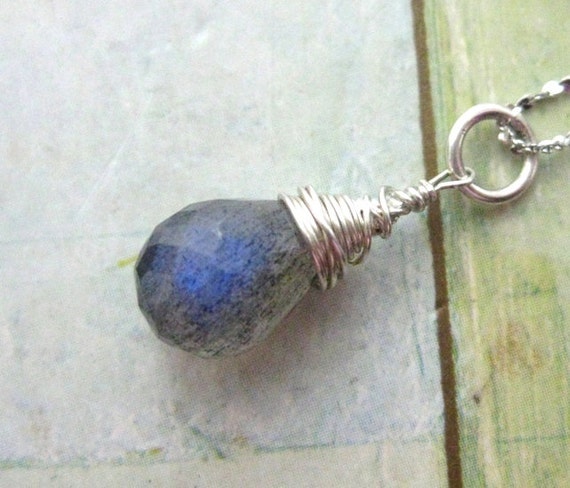
A jump ring serves as a bail to hang a charm or pendant
You can make a jump ring to attach to a small charm and wear it as a pendant, attach to a bracelet or perhaps to a zipper.


blue flash labradoirite pendant with ring bail

Thursday, July 24, 2014

Drying Herbs

dried mint leaves
Drying herbs the old fashioned way is the easiest thing in the world. All you need to do is to make a bundle, tie twine or thread around the stems and hang the upside down somewhere warm and dry. When we were kids, my mum used to tie all sorts of herbs and flowers and hang them in the attic under the eaves.
big bunch of mint drying
Last week a friend gave me an enormous bunch of mint. Yes, I know it looks like bundle of weeds, but if only we could photograph smells, you'd be yearning for a mojito right now! When drying herbs, I hang them on cute pink hooks off the side of the freezer, where it is nice and warm. In this Summer weather they dry super quickly.
Here's some I dried earlier in the year. I store the aromatic leaves in larger mason jars to keep the moisture out. They make fabulous, digestive tea. Pop 2 or 3 into a mug, add water that has gone off the boil and leave to infuse for a few minutes.
rosemary ice cube
If you have nowhere suitable to dry herbs, or don't like the look of them hanging up, you can freeze them instead. To learn how, please refer to my older post 'Herby Ice Cubes.'

Sunday, June 15, 2014

Keep Your Earrings Together.

Earrings can be a bit like socks. Pairs have a sneaky habit of parting company, so you end up with a bunch of useless odd ones. Seriously, where do the other ones go?
own earrings, not for sale
 Here is a great tip for keeping your stud earrings together in the jewellery box when travelling or simply for pretty display purposes.

Button down the hatches cos these babies aren't getting away! Just pin them through the holes of a button to keep them from splitting up. If you are travelling, I'd then wrap them in a bit of thick paper tissue or  perhaps some felt.
keeping earrings together with a button
Fastening the studs through a button is also a lovely way to display your stud earrings on your dressing table! You could even try joining a few buttons together to make a cute decoration.
button hook for displaying earrings
I did a quick little experiment and threw together this button hook with some pink craft wire. It's not for sale, I was just playing around with the idea, but you see where I'm going with it.

The bottom button serves as a holder for dangle earrings too. If you don't work with craft wire, you could try this at home with thick thread or chord perhaps. Why not give it a go and see what works?


Sunday, February 2, 2014

Cinderella Goes to the Ball on a Post Christmas Budget

I'm more Bridget Jones than Cinderella, more likely to get soaked in a puddle than dance the night away in delicate glass shoes.  
I'm more Bridget Jones than Cinderella
However, this not-so-posh Miss did her best to get ready for the ball this weekend on a small budget and without mishap. I (mostly) succeeded. We wont count sticking my finger through the first pair of 'ladder-resistant' stockings and a disastrous attempt at instant tanning. 

Generally, I prefer one-of-a-kind items made by small designers over recognisable big labels. I find you get value for money without going cheap. More importantly, there's no fear of someone else having the same piece. When it comes to accessories, it's Etsy all the way and of course, my own handmade jewellery. I do beauty on a budget, choosing carefully what to splurge on and so spend my hard earned cash supporting fellow Irish Etsians and small local businesses where possible.
honey, a reviving face mask
Looking a bit wilted, I first needed a reviving face pack to perk up my wintry skin. Having tried and tested all sorts of promising products and natural recipes over the years, I swear by sweet and simple honey. Just spread a little bit of it on your make-up free face, avoiding the eye area, and tip of the nose (for drips). Leave it to work for 10 to 20 mins before you jump in the shower. It's like an instant refresher facial that plumps out the skin and puts the life back into it. Brilliant if you've skimped on beauty sleep. As well as delivering minerals and moisture, it is mildly antiseptic; good for spot-prone and oily skin as well as dry or tired complexions.

The previous day I had exfoliated and polished the rest of my skin with a mixture of sea salt and honey from the kitchen cupboard. Granted, despite all that, I still had the fore-mentioned mishap with instant tan,  and had to make do with a tint of bronzing make-up. 


Supporting local and/or small businesses as ever, I had my hair and nails done nearby at New Look Hair And Beauty Bar, on Clanbrassil Street. This is a small but growing business that is much more than your average local hair and beauty salon. Away from the city centre bustle, tucked on a corner in Dublin 8, it is run by Trish, an astute business woman who really understands customer service. I'm a little dance-dishevelled by the time of the photos, but loving this modern, messy bun, creatively done by stylist, Raissa.

Like many crafts, jewellery making and especially wire wrapping, spells disaster for a girl's nails. Trish did a massive job getting my short talons to look decent in just 15 mins with a file and shape and Shellac polish for €20. As I was going almost head to toe in black, I chose a colourful magenta to match my eyeshadow and scarf.

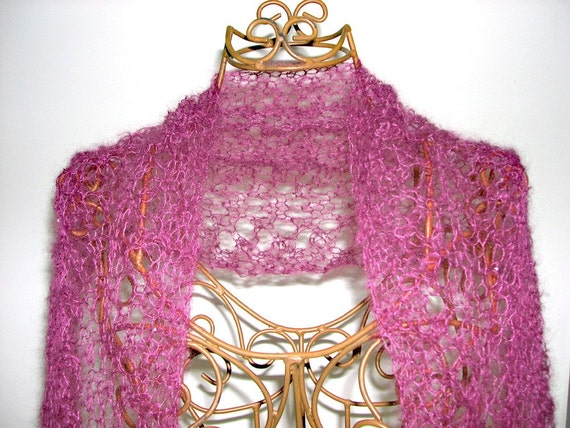
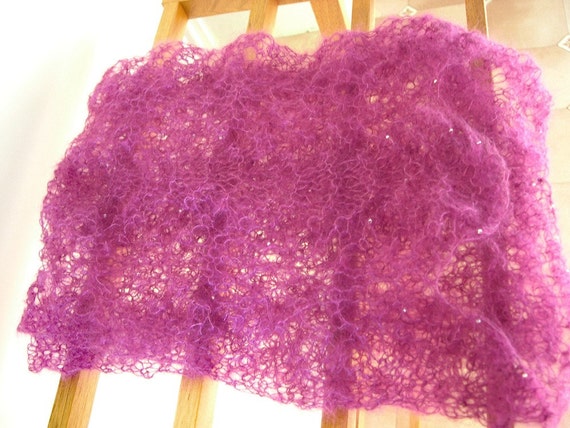
 Knitted Cobweb - scarf

The super soft kid-mohair and silk scarf was delicately knit by my Etsy pal, Brigitte, owner of Purls of Colour. It is soft and wispy like a silk cobweb. You can't see them well in the photos, but there are tiny silver seed beads woven into the ends of the scarf. People often mistakenly think a handmade item is or should be cheap. But a lot of time and effort goes into creating quality handmade goodies. If well made like this, it should last longer than the mass produced alternatives. A scarf of such quality and softness was a steal at €54. 
In these 'recessionary' times I wasn't about to blow my fun money on a new, floor length dress that I will probably never wear again. I had this Ben De Lisi number in my wardrobe since last year. It matched my main criteria, i.e., after Christmas, it still fits and the lines skim over the bumps! Saved me from resorting to Bridget Jone's style knickers! (BTW Photo apologetically borrowed from Debenhams where I bought the dress.)
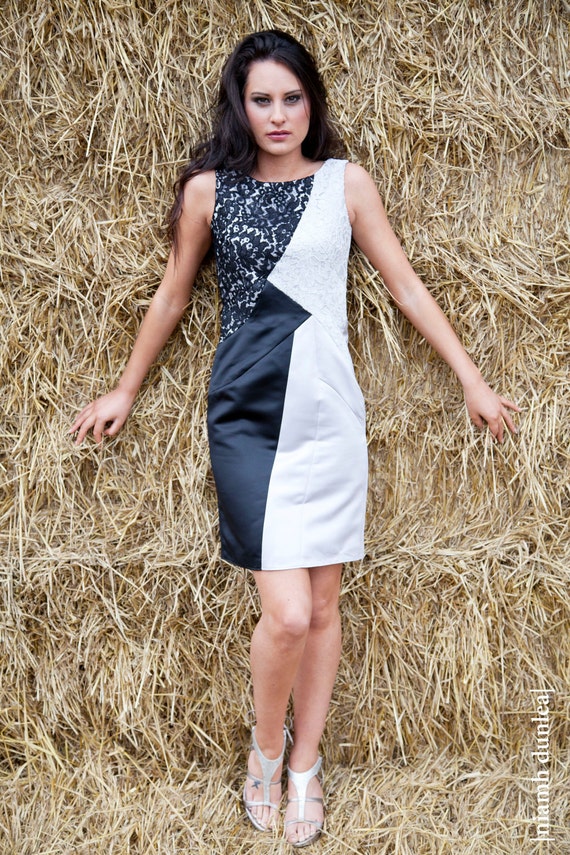
Custom made black and silver lace and satin dress with panels.   (Free shipping worldwide) Crochet lace and applique cotton and silk apron-style knee-length dress Great Gatsby style

These are two dresses I really would have loved to have and wear: the flattering panelled dress by Belinda Sullivan is on my wishlist or, if I had the figure for it, the Gatsby-style lacy number by Alice Halliday. Both designers are local and found on Etsy.

 https://www.etsy.com/ie/listing/174594355/long-black-earrings-downton-abbey?ref=shop_home_active_4


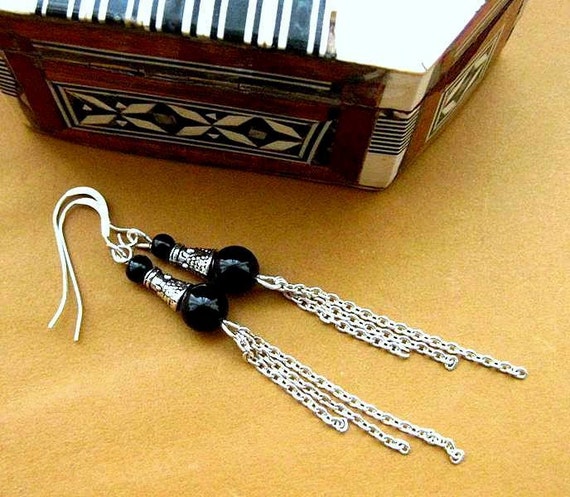
My jewellery was, naturally, made by myself. The onyx earrings are almost identical to 'Midnight in Dublin' available in my shop, except my own pair are a tiny tad shorter. The necklace started out life as a bracelet but I converted it to a choker with a length of double link chain. 
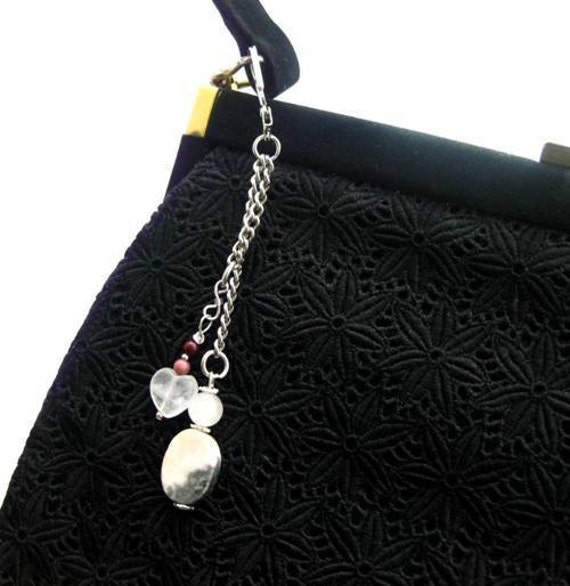
Pink Gemstone Keychain, Jeans Fob, Zipper Pull or Purse Charm. Rose Quartz Heart.

My bag is a vintage little gem that I picked up a couple of years ago from Jelly Tottlers. When it comes to bags, I simply adore vintage, especially one in a quintessentially 50s or 60s shape. 80s can be fun too but I can't believe I am old enough to have lived through an era that is now considered vintage.

All girls know there's an art to squishing all you need into a small bag. This one fits a few mini touch up products, lipstick, perfume, keys and phone but I also had to squash in my camera. The inner pockets are zipless pouches and my wallet simply wouldn't fit.

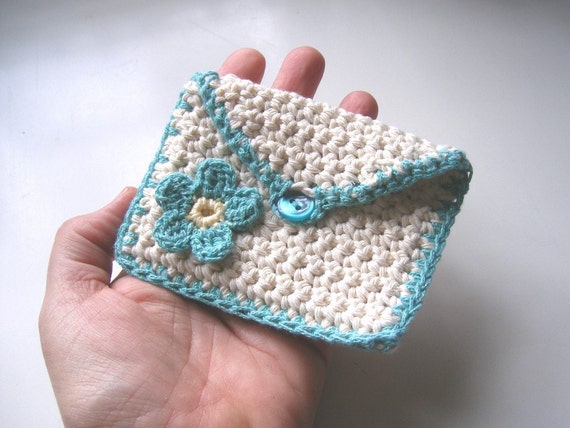
Petal Purse - cards, money, mp3, store cards, makeup, coins
slimline petal purse by HuggleKnits.
Then I remembered a small crochet purse that another Etsy friend had given me. This petal purse by Mo of HuggleKnits is super slimline and flexible enough to squidge into an evening bag.

So that was me done. And despite the rain, I didn't get soaked in a puddle. Nor did I meet Colin Firth, but that would have been an entirely different kind of blog post...

***
Related links:
Black onyx bracelet (Etsy listing)

Friday, October 25, 2013

How to make a Wire Spiral Charm

This is the second article showing a glimpse at how I work. Last Friday I showed how to temper or harden wire with a rubber hammer.  Today I'd like to show how to make a wire spiral charm.
modern Celtic street art, Dublin city
Spirals, triskeles and concentric circles are among the oldest design motifs known to us. They are found in ancient artwork in diverse corners of the world, and are intrinsically associated with the Celts in particular. Famously, they are a key feature seen at the megalithic tombs of Newgrange, Ireland. Over 5000 years old, the burial chambers predate the pyramids of Egypt and Stonehenge in the UK.

Born and bred in Ireland and proud of our rich heritage, I like to use the spiral frequently in my jewelry. Making spiral charms is a simple pleasure and here is how it's done:

You need some jewelry wire or plated craft wire, a round nose pliers, a flat nose or chain nose pliers and side cutters. Unless using fairly hard wire (eg. 16g), I would usually also temper, or harden, the charm with a rubber hammer and steel block.
  

Grip the wire as close as you can get to the end using the tips of the round nose pliers. If the edge of the wire is jagged, nip it cleanly with the side cutter. In one smooth movement, roll the wire back on itself, towards your body to create the centre of the spiral. There are other techniques I use to format the centre, e.g., a looser, wider circle or tighter wire work with no centre hole at all, but this is an nice easy one to start with. I also chose to use a medium-sized centre loop here as I am later going to widen and bevel the charm with a special finish.
  

Gently but firmly grip the loop you've created with the chain nose or flat nose pliers so that half of the loop is in the jaws and the wire is pointing up and out as shown. Careful not to squeeze too hard or you will squish or dent the wire.
  

With your free hand pull the wire down towards the floor in one smooth movement while still holding the loop in the same starter position. With practice you will do this quicker, enabling a cleaner curve. Shift the work around so the wire is again near the top and pull the wire down again to create the next section of curve. 
      

Repeat these two movements again until you have created a 3 'banded' spiral. Grip the loose end of the wire with the round nose pliers, close to the end of the jaws but not with the tips this time. In one smooth movement, curve the end back over itself towards the spiral using the curve of the jaws to guide the shape.

Temper (harden) the charm with a rubber hammer. (For instructions please click HERE)

    
I mentioned at the start that I was going to widen this charm and give it a special finish. I used the flat head of a chasing hammer to flatten and spread the wire.This action moved the centre loop closer to the next band for a cleaner look. I then bevelled the charm by tapping all the way around it using the ball head of the chasing hammer. 

This silver plated charm also got further texturing when I distressed it with a file to let some copper come through the silver. But that is an other episode in its journey, to be told another day....

*** *** ***


To see how to open jump rings the correct way, CLICK HERE. (Also of interest for non-jewelry artists for simple repair works!)

Click HERE for general handy tips from tea-dying lace to making herby ice cubes.


Friday, October 18, 2013

How to Harden Silver Wire Charms and Findings with a Rubber Hammer

Thought I'd show a glimpse at some of the techniques I use in wire work, whilst also sharing a few tips with budding jewelry artists. This post looks at tempering (ie hardening) wire charms and findings, a technique I also sometimes apply to wrapping sea glass.

Simply working and shaping wire into a charm or finding automatically hardens it to a degree. However, the more pliable gauges (anything softer than 18g /1.0mm)  really require more serious tempering. There are a couple of ways to do this. These include working it with nylon jaws pliers for mild effect or using a tumbler , which is an item I covet as it also polishes the wire for you.  My favourite method is tapping with a rubber hammer.
Nylon jaws pliers for straightening, also has mild hardening effect
I would use nylon jaws pliers for straightening out wire. As a bonus, they harden it somewhat in the process. You can also harden finished charms and findings by squeezing them with this pliers but it is nowhere as effective as a rubber hammer.  Hammering lends good strength and rigidity to the metal. As a bonus, you may find that thwacking with a hammer is a good stress buster!!

You need an anvil or steel block and a hammer designed for the purpose. For tempering without flattening the wire, I use a standard double-ended rubber hammer. A very popular and not too expensive model comes with yellow and black ends. I  bought mine here in my local supplier, Beads & Bling in Dublin but you can get the same one anywhere online from good craft suppliers. It's beginning to look a little worn with all the work I've been giving it but it is so simple to use and works like magic in a matter of seconds on silver plate/similar as well as solid silver.


Place the charm or finding flat on the block. Give it a few firm taps with the yellow end. No need to put all your strength into it, but do apply short, sharp raps.

I'm afraid it's a little difficult to photograph this using only one hand, but to add a little extra pressure and control, hold the hammer in your fist, with your forefinger extended along the handle and pointing to the head as shown.  (Hmm, due to a spot of dry skin lately,  my finger also looks as old and battered as the hammer today but how and ever, let's carry on....)

Follow up with a few hard taps with the black end.. Voila, your wire work is several times harder and less likely to bend out of shape.

It is not advisable to tap where wires cross over each other as this can have the opposite effect,  creating a weak point in the work. I would use the hammer all the way round the curve on this earring hook, except at the start of the loop where the wires cross.
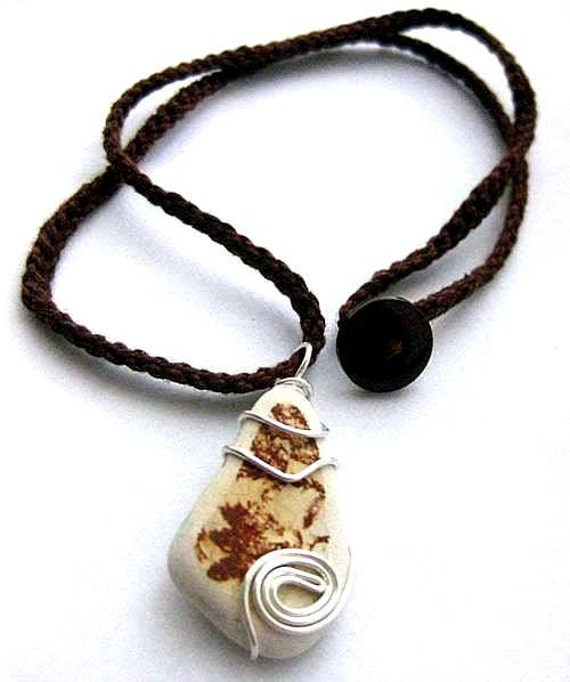
Wire-wrapped sea pottery pendant
I also use the hammer at certain points in the middle of wire-wrapping sea glass. It takes quite a bit of practice to learn when and where exactly to do this as you don't want to harden the wire to such a point that it wont bend the way you want it to go. For example, when making this sea pottery pendant, I formed the swirl in the middle of a length of wire, hammered only the swirl to temper it rigid. After slipping the swirl over the bottom of the shard, I proceeding with wrapping from either side and up to create the bail. After the usual bends and tweaks to tighten the wrapping to secure the piece, I hammered just the bail for hanging.

I  use a chasing hammer when I want to flatten and spread the wire. Both hands are required to demonstrate the special technique for spreading the wire flat, as I hold it down with one hand and use repetitive fast strikes at an angle with the other hand . This one will have to wait for another blog post so...

The round end of the chasing hammer is good for creating or enhancing a dimpled texture, but that too, is a post for another day...
 ***


To see how to open jump rings the correct way, CLICK HERE. (Also of interest for non-jewelry artists for simple repair works!)

Click HERE for general handy tips from tea-dying lace to making herby ice cubes.