Showing posts with label abc of gemstones. Show all posts

Sunday, November 16, 2014

I is for Iolite, Iron Ore, Irish Materials etc ABC of Jewellery

I've reached the letter I in my ABC of jewellery. This  is a rough guide to jewellery materials and techniques I use as well as designs and inspirations. I is for Iolite, Iron ore, Inspiration and Irish materials.
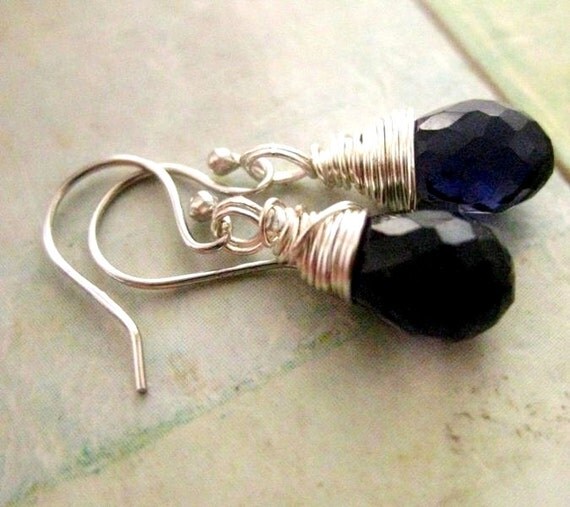
 https://www.etsy.com/ie/listing/211360685/iolite-earrings-blue-teardrop-silver?ref=shop_home_active_1
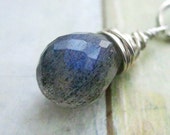
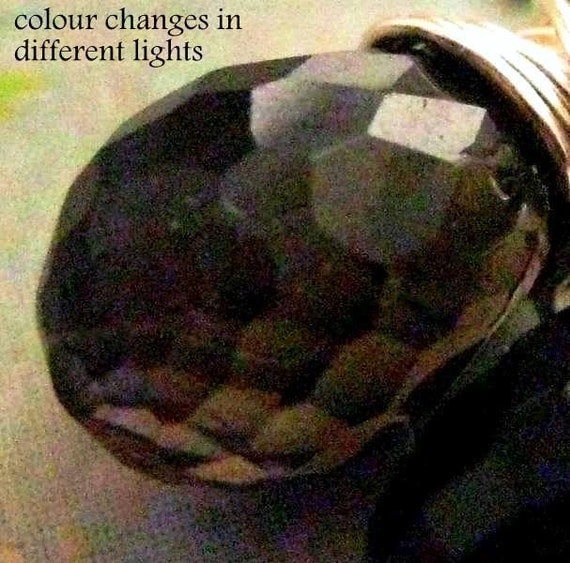
Iolite gemstone is a form of cordierite. It is a transparent, most often indigo or deep sapphire blue stone that can be confused with amethyst. However, if you hold it to the light you can see it is a cold blue and sometimes a bluish violet, unlike the warmer purples of amethyst. The name derives from the Greek 'ios' meaning 'violet.' Specimens in the deeper shades of blue can look like tanzanite. Some rare varieties are a yellowish gray or brown. On occasion, like these stones here, a blue version can have a hidden, golden-grey flash that appears unexpectedly like a rainbow in a puddle.
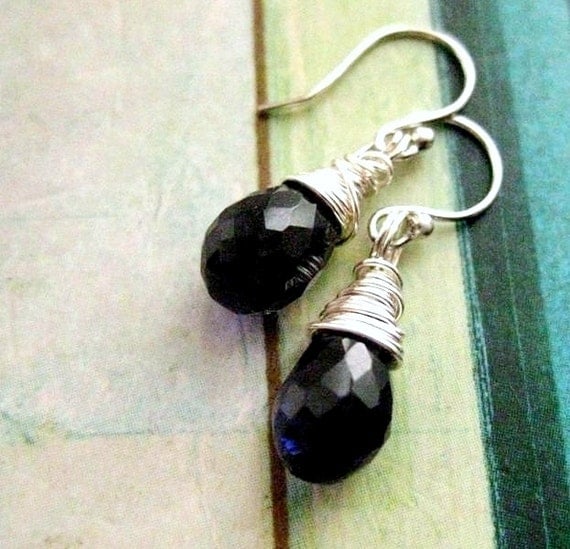

Iolite teardrop earrings, Indigo Sky
Iolite is not very common and though it was popular in the 18th century, it can be hard to find contemporary iolite jewellery. These beautiful little teardrops make a pretty pair of earrings. Typically, they will change colour with the light and as the wearer moves about, from deep indigo to paler blue to a very transparent golden-gray.

Metaphysically, iolite is the stone for vision and creativity. Healers believe it treats ailments of the eye as well as insomnia and failing memory. It is sometimes used in meditation and hypnosis to help travel back to one's roots and find that inner self.


I is also for Inspiration. Craft artists garner much inspiration from what we see around us. Like many fellow artisans, I find nature, in particularly the sea, generates creativity and ideas. You will find evidence of this in previous posts under the tag 'Inspiration'.  Or why not pop into the blog section 'Inspiring Walks'  if you are in Ireland (especially Dublin) or planning a trip and want to get inspired by our lush countryside too.
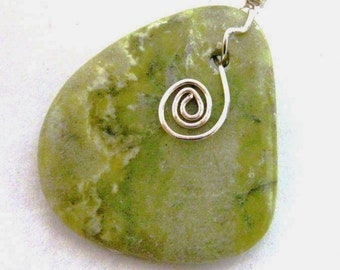
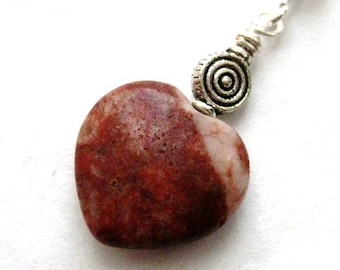
Irish Connemara Marble Pendant. Sterling Silver Celtic Spiral. Optional Sterling Silver Chain. Meadow Irish Jewelry. Cork Red Marble Pendant. Red Heart.  RĂ³sanna
Though I buy some stones and findings from the UK and beyond, Irish materials feature prominently in my jewellery. The most well known is Connemara marble but our other rare marbles, such as Cork Red and the fossilised Kilkenny black are just as ancient and special. 

I also use sea glass and sea pottery plucked from local shores. Though these may sometimes have originated as imported bottles, vases, crockery, tile etc, generally speaking, sea glass and pottery usually would have fallen into the sea locally or within a short radius. Rarely do these pieces travel across the ocean from distant shores. 
 
As well as Irish glass and pottery we do find a lot of English china and European terracotta quite simply because these would have been commonly found in households of a busy port like Dublin. The English specimen on the left was found on the same Dublin beach as the Irish, Arklow Pottery shard on the right. As they have been buffed for decades by the Irish sea and were found right here, in my heart they are both local materials.


Iron ore, also known as hematite
Iron ore is also known as Hematite. This mineral was already covered under the letter H.

If you'd like to read more in this series, please see the links below

Previous posts in this series
A  B  C  (plus C for Crimping D E F  (plus F for Findings) G1 and G2, H

All of this series: ABC

Sunday, August 10, 2014

H is for Howlite, Hematite & Headpin. ABC of Jewellery

Heyho, we've reached letter H in my ABC of Jewellery. This is a not-so-comprehensive guide to jewellery materials and techniques I use as well as inspirations and design styles.  is for Howlite, Hematite and Headpin .
 
Natural howlite                             Dyed, 'turquoise' howlite
Howlite is a porous, fairly matte, opaque stone. It is most often dyed artificially and re-named with a marketing term such as 'turquoise howlite,' 'pink turquoise,' 'howlite jasper' 'lapis jade' and all sorts of poetic names. In its natural state it is usually grey or white and indeed, is also often confused with 'white turquoise,' a much rarer mineral. The fact is, howlite is not turquoise. It's not jasper, jade or any other stone. It is what it is, a borate mineral that doesn't take a great polish, but can be dyed easily in beautiful colours and is perfect for fun and affordable jewellery.

Metaphysically it is the stone associated with awareness and wisdom. Natural healers believe howlite brings calm and relaxation to a troubled or anxious mind, relieves pain and helps with insomnia.
magnetised hematite beads
Hematite is ferric oxide, or in plane English, a form of iron ore. It is a shiny, charcoal grey or black. In its raw state it often appears red due to rust. The name 'hematite' comes from the Latin 'blood stone,' in reference to the redness. Sometimes the beads can be a bit heavy and not a good choice for earrings.
double stranded pearl choker with hematite focal (own necklace)
Hematite is often magnetised, which can be tricky to work with, or very useful in certain designs. When beading the double-stranded pearl necklace above, I placed a magnetic hematite bead at the centre of both strands to keep them neatly together and help the choker sit well. I am working on variations of the design at the moment.
Magnetic hematatite beads keep the strands from separating
As it is a raw form of iron, natural healers  use its energies for treating blood disorders. It it also the stone associated with grounding, calming and and clarity of thought.

Headpins
Headpins are a type of finding frequently used in jewellery making. They are basically a long pin with a 'stopper' on the end used for wiring up earrings, pendants etc. They resemble straight pins used in sewing but come in a wide range of sizes and metals. The ends are most often flat, but you can find more decorative ones with a bead on the end, or indeed you can make your own out of wire, hammering the end. Alternatively you can form a spiral at the end to keep the bead or stone from slipping off. You will need to harden the spiral, for example, with a rubber hammer.
work in progress, beads threaded on headpins &1 finished piece
H is also for Handy Hints and How Tos, which you will frequently find on my blog. Some are tutorials, some are more general tips.

I could have sworn H was for something else important?  Woops, I forgot my Etsy shop, Handmade by Amo'r!!  Why choose handmade? Because of the quality, uniqueness and attention to detail.
***

Previous posts in this series
A  B  C  (plus C for Crimping D E F  (plus F for Findings) G1 and G2

All of this series: ABC


Sunday, July 13, 2014

G is for Gemstones and Garnets. ABC of Jewellery.

Oh Goody, we've landed on the letter G in my ABC of jewellery! This is a not-too-comprehensive guide to materials and techniques I use as well as inspirations and design. G is for Gemstones, Glass, Garnets, and let's not forget Green, a colour usually prevalent in my Etsy shop! Again, I am splitting this article into two. The second part will be published on Thursday coming.
rose quartz, own photo
Gemstones are precious and semi precious stones used for decorative jewellery and accessories. Traditionally, the more valuable 'precious' stones have always been diamond, sapphire, emerald and ruby. However, the boundaries between precious and semi precious stones are becoming a little fudged now with very exclusive garnets, for example, crossing the divide while manufactured diamonds slide down the scale in the opposite direction.
selection of semi precious gemstones, own photo
The family of gems generally accepted as semi precious stones encompasses an extensive list of rocks and minerals (here's a list from Wikipedia.) You are most likely familiar with a lot of them. Most have a long tradition as healing stones and have been attributed special properties and/or are tied to certain beliefs. Many are designated birthstones. Born in February, amethyst is my birthday gem, for example.
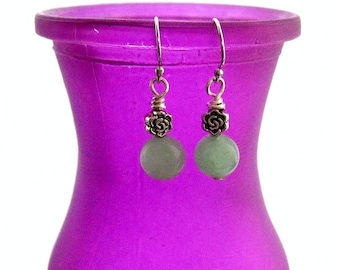
  Seafoam Earrings. Amazonite Earrings with Flower Detail. Summer Breeze
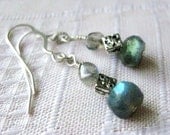
Blue flash  labradorite earrings      Seafoam amazonite earrings

The most widely found category of stone found on the planet is feldspar, covering about 60% of the planet's surface. Feldspar is defined as a rock forming mineral, characteristically made up of pale or clear crystals consisting of aluminoscilicates of sodium, calcium and potassium. That's all the science you will get from me. I promise. The word 'feldspar' means 'field stone' in German. Labradorite is a fine example in this family as is amazonite (pictured above.)  
some varieties of the quartz (own photo)
The second largest family is quartz and this breaks down into another long list of minerals including rose quartzamethyst, citrine, clear quartz crystal  (aka rock crystal) and more. Quartz is a very hard mineral and it is found all over the globe.
Newgrange (photo sources on Wikimedia Commons)
In Ireland, it is most famously seen glistening in the Neolithic tombs of Newgrange. Click here to read my previous post about this mystical place and the pendant it inspired me to make.
https://www.etsy.com/ie/listing/193200594/irish-connemara-marble-pendant-sterling?ref=listing-2      https://www.etsy.com/ie/listing/195433907/irish-jewelry-cork-red-marble-pendant?ref=listing-1
Connemara marble  pendant        Cork red marble pendant

Marble is not technically classed as a gemstone. However, the definition fits, so our rare, indigenous Irish stones such as Connemara marble, Cork Red, Kilkenny and Ulster white marbles may be considered as such. All are found only on this island and are in scarce supply. I proudly include these indigenous stones whenever I can get my hands on some decent pieces.

Though we do not have an important gemstone industry and many of the old mines are now closed, Ireland boasts a fair share of minerals. Most famously, a seam of amethyst can be clearly seen in the cliffs at Keem beach, Achill island. Not many Irish people are aware of what other gems lie beneath our feet.  Examples of what can be found include rock crystal in the South West, malachite and smithsonite in the West, beryl and calcite in the North West and pyrite in the midlands.
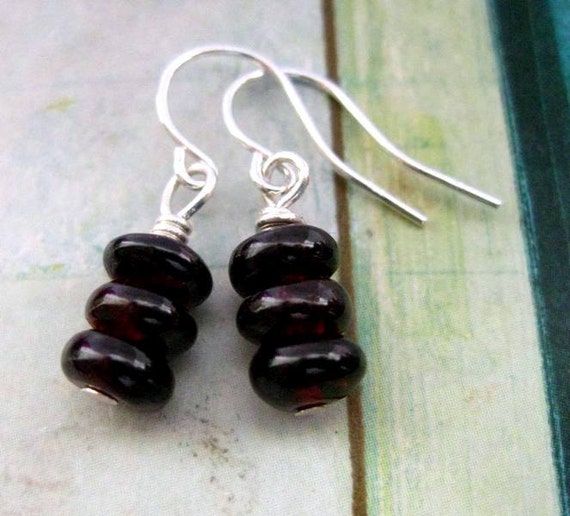
garnet earrings
Garnets are one of my favourite gemstones. There is something very luxurious about this richly coloured silicate mineral, especially when contrasted with cool silver. It does come in other colours besides claret, green grossular garnet being the most famous after red. 

Garnet is the birthstone for January and like many other gems, has a long tradition as a healing stone and has always been surrounded by myth. Once believed to protect soldiers in battle, the gem is often called 'the warrior stone.' You can read more in my previous post 'Garnets, Birthstone for January.'

Watch this space for part 2 featuring glass and some of it's forms.

***

More in this series:

A  B  C  (plus C for Crimping D E F  (plus F for Findings)


Sunday, May 18, 2014

ABC. F is for Fairies, Fluorite, Feldspar and Fan Necklaces

Continuing my ABC of Jewellery, (a not-so-comprehensive guide to jewellery, jewellery making techniques and materials I use, design inspirations etc) F is fun and fantastical with Fairies! In terms of materials it includes Fluorite, Feldspar and Findings and in design it brings us to Fan necklaces.  Encompassing a huge array of crafting supplies,  'Findings' will get a post all of its own next.


Fluorite is a semi transparent gemstone. It is the mineral form of Calcium Fluoride and comes in so many hues it has been nicknamed 'the most colourful mineral in the world.' The most common shades are blues, purples and greens, and next is yellow or clear. Often it boasts more than one tone and can have gorgeous banding.

The ancient Egyptians and the Chinese have carved the mineral for decorative purposes for centuries. In the 1700s the mineral was believed to cure ailments of the kidney. Apothecaries would grind the fluorite into a powder to be dissolved in water and ingested as medicine. Please do not try this at home folks!
https://www.etsy.com/ie/listing/60254054/labradorite-pendant-starfish-sterling?ref=shop_home_active_9https://www.etsy.com/ie/listing/26157924/amazonite-gemstone-earrings-sterling?ref=shop_home_active_1&ga_search_query=amazonite
Feldspar is a large group of rock forming minerals. Forming approximately 60% of the earth's crust, it is the most plentiful mineral group on the planet. (You  can find the science bit HERE on Wikipedia.) The name comes from the German 'feldt spat,' meaning field stone. Seemingly when it erodes, it releases nutrients such as potassium into the soil, enriching plant life.


The feldspar gemstones most often used for jewellery are amazonite, moonstone, labradorite, obisidan and a black tourmaline (schorl tourmaline.) 
https://www.etsy.com/ie/listing/90710934/blue-flash-labradorite-pendant-sterling?ref=shop_home_active_4&ga_search_query=labradoritehttps://www.etsy.com/ie/listing/183590520/labradorite-earrings-blue-flash-gemstone?ref=shop_home_active_4


Of these, labradorite is my favourite. It is a feldspar found mostly in Labrador, Canada and is famed for its blue flash when it catches the light. Metaphysically, the stone is associated with the delaying of aging but let's not tell the skin cream companies.

https://www.etsy.com/ie/listing/175447532/red-gemstone-necklace-statement-bib?ref=shop_home_active_2
red gemstone fan necklace
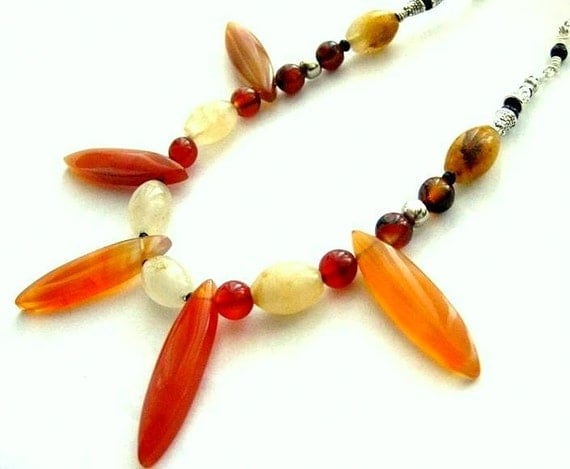
F is also for Fan necklaces, a currently popular style of chunky, statement neckwear and a cousin of the collar neck piece. As the name suggests, it is designed to fan out and is therefore, an excellent choice for breaking up a wide area of skin when wearing low necklines. It also can create a little drama worn over a high, plain neckline. The style has origins in tribal, African jewellery and other ethnic cultures including Native American, Amazonian, Aztec, Egyptian and more. The fan shape in this carnelian necklace is created with petal-like stones, drilled laterally at the top.
https://www.etsy.com/ie/listing/168874285/irish-fairy-ornament-sea-glass?ref=shop_home_active_1&ga_search_query=sea%2Bglass%2Bfairyhttps://www.etsy.com/ie/listing/170299846/butterfly-fairy-charm-carnelian-rear?ref=shop_home_active_3&ga_search_query=fairies


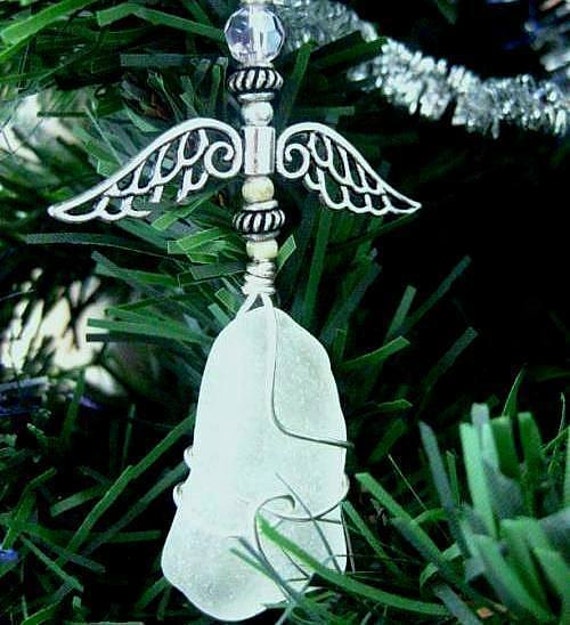
Ireland is a land associated with Folklore and Fairies, so they naturally belong in my collection.You can find 2 types of Fairies (and/or angels) in my inventory; larger sea glass ornaments and smaller, beaded charms or pendants.
sea glass fairy angel ornament or sun catcher
I wire wrap more unusual sea glass fairies, which are a type of art doll or home decor and usable as sun catchers, Christmas ornaments and large pendants for adults. They are not suitable as toys or as pendants for children but do make pretty nursery decorations to hang out of reach. 


Genuine sea glass has been tumbled, smoothed and frosted by the ocean over several decades. I believe the wire work should be just as aesthetic as the glass without overwhelming it. I have developed my skills to create a style of wrapping that is lightweight and pretty in appearance but very secure. This shows off the glass and makes for very light and airy looking sea glass fairies.

Irish belief in fairies goes back to, at least, Celtic times and is much more complex than our love of whimsy and story telling.  I found this interview with Dr Jenny Butler, Folklorist and Lecturer, very interesting from a social history point of view. Be aware, it's not short, so pop the kettle on.
***

CLICK HERE FOR THE ABC SERIES SO FAR

or by letter:
A  B  C  (plus C for Crimping D E

Thursday, May 1, 2014

E is for Earrings, Emerald, Eyeglass Chains...

We've reached the letter E in my ABC of jewellery making. This is a not-so-comprehensive guide to jewellery materials, tools and techniques I use as well as design influences. E is for Eyeglass chains and Earrings of course. It is also for Emeralds (well, of the Swarovski kind) and how could I forget, my Etsy store!!
https://www.etsy.com/ie/listing/183590520/labradorite-earrings-blue-flash-gemstone?ref=shop_home_active_3https://www.etsy.com/ie/listing/183247414/sunshine-citrine-earrings-sterling?ref=shop_home_active_4https://www.etsy.com/ie/listing/153625678/wedding-pearl-earrings-downton-abbey?ref=shop_home_active_8
E is for Earrings and recently I went on a bit of an earring making binge so have plenty of ear candy listed or coming soon. I bead and wire wrap mostly short and medium length dangles though I sometimes have fun with big earrings. I always use solid .925 sterling silver hooks, never silver plate. On occasion solid copper is featured. I have a nickel allergy myself, though can tolerate some plated silver pendants, but my earlobes always know the difference. Therefore I choose nickel-free or hypoallergenic hooks for my customers.

If you are unsure about the metal when buying earrings online always ask the seller first and stick with reliable sellers with good feedback or customer reviews. Sterling silver hooks are usually hallmarked with  .925, which refers to the minimum amount of real silver in the metal (92.5%.) Fine silver (.999) is purest. Here is a good silver purity guide from Wiki - but don't forget to come back to me! Of course, people vary in the metals that they can or can't tollerate. There are other hypoallergenic and/or low nickel metals such as argentium, surgical stainless steel etc. Sometimes it can be a matter of trying out what works for you as an individual.

 Click here a peek at the Earring Section of my shop.
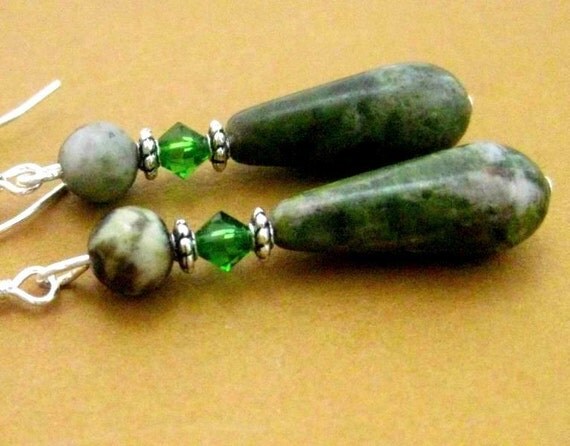
Connemara marble and Emerald Swarovski Crystal earrings
Emerald is a precious stone I'm afraid I do not use. Mostly, I work with semi precious gems, Irish marble, sea glass and pearls (but not the 4 precious stones which are diamond, emerald, ruby and sapphire.)  But I do use Emerald Swarovski crystals and that counts. Right?  This rich green and sparkly crystal is a stunning match for Connemara marble.

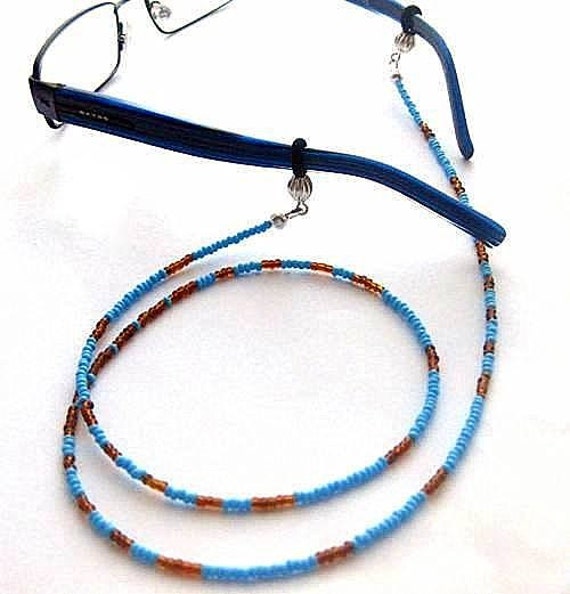
Blue Eyeglass Leash. Beaded Lanyard for Spectacles or Sunglasses.
Blue and russet, beaded eyeglass chains
E is also for Eyeglass chains...and the Elastic ends on them too, for that matter. From time to time I get a yen to bead one. I fess up I do tend to complicate it for myself by creating a tedious pattern. I say tedious because you need to concentrate hard when beading a pattern, and by its very nature, beading can relax me so much I forget what I'm doing and lose count! More than once I discovered the next day that I'd made a wee mistake and had to start over again. So I've learned never to bead a long string like this above when I'm tired!
I was recently asked to make these special eyeglass chains based on the Emerald Isle itself - or to be more specific, based on the colours of the earthy landscapes of Ireland. The dash of purple is meant to represent heather, which grows abundantly in the bogs and hills. You can read more about this project HERE.

I shall leave the letter E at the door to my Etsy Store. Perhaps you'd like to pop in and see what's new?

CLICK HERE FOR THE ABC SERIES SO FAR

or by letter:
A  B  C  (plus C for Crimping )  D

Friday, April 4, 2014

D is for Druzy, Downton-esque and Design

We're at the Letter D in my ABC series (a not so comprehensive guide to jewellery materials, tools and techniques I use) D is for Druzy, Downton-esque and Design.
Druse crust on white quartz, own photo

Druse, or Druzy, is a natural crusty layer of crystal  formation  on  top of  the fracture surface of a rock.    It most commonly occurs on agate, malachite, quartz, chalcedony, or  turquoise. This pretty  piece  is white  quartz.    The   formation  of   tiny   crystals  occurs  when  ground water carrying dissolved silica gets forced into the porous gaps in a rock then cools rapidly. The  stone does not  glow   like it  appears  here  all the time, but does catch the light beautifully as you move it about.


Metaphysically, this stone is associated with banishment of negative thoughts, said to help you through worrisome or negative times. In Feng Shui is it believed to bring light and life into a dark corner.

This egg-shaped stone will make a beautiful piece of bridal jewellery or a pretty First Holy Communion gift, most likely a pendant. As yet I haven't decided how to approach the design but am leaning towards treating it like a piece of sea glass.

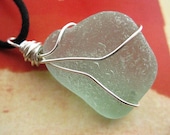
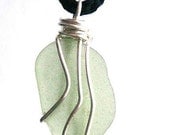
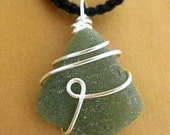
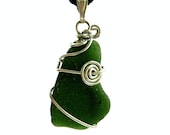
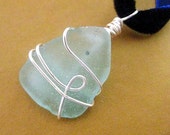
Irish Seaglass Pendant.  Pale Aqua Beach Glass. Dunehttps://www.etsy.com/ie/listing/151729295/sea-glass-necklace-irish-beach-glass?ref=shop_home_active_10Green Irish Seaglass Pendant. Olive Ocean


I have developed my own, light and free style of wire wrapping sea glass and sea pottery that shows off the beauty of the material while making a neat and pretty feature of the wire itself without too much fuss. Above are examples of my sea glass wrapping (the second pendant, Zest, is still available.) I'm pretty sure I can adapt my technique to show off the druse quite easily. In fact, the crusty nature of the rock will probably require less wire on the front to 'stick'.

*
D is also for Downton-esque...a made up term yes, but lovers of Downton  Abbey will know  what I mean. If you love the TV series as much as I do, you will probably also be madly in love with the early 20th century style and fashion. So far covering the period between the sinking of the Titanic in 1912 to post war twenties, we get to follow the changes in style from Edwardian through Art Deco and Great Gatsby-like glam. 
https://www.etsy.com/ie/listing/153625678/wedding-pearl-earrings-downton-abbey?ref=shop_home_active_4Long Black Earrings. Downton Abbey Edwardian Style. Onyx & Chain. Midnight in Dublinhttps://www.etsy.com/ie/listing/179597127/clear-quartz-crystal-earrings-vintage?ref=shop_home_active_2

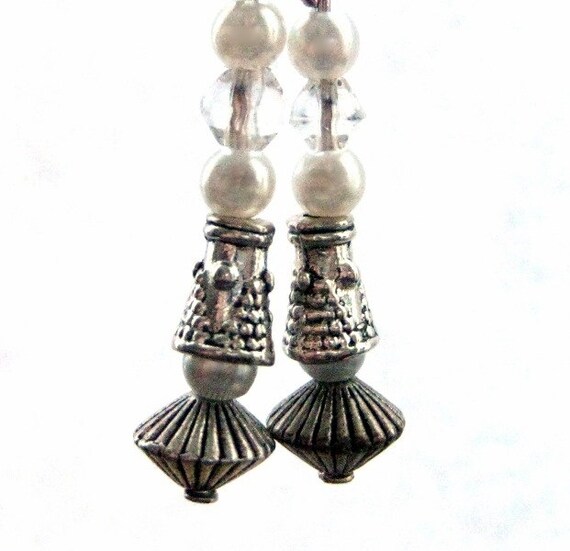
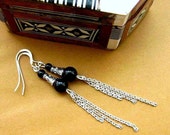
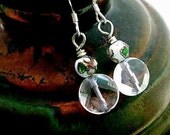
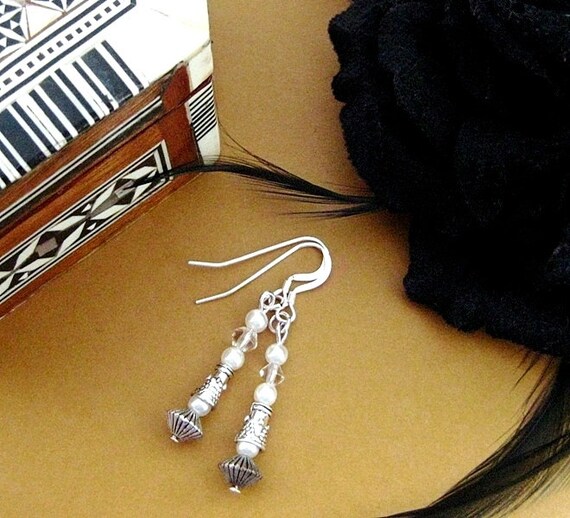
I don't religiously copy the jewellery of the era but draw on it to inspire modern designs that capture the essence of the period. I am not a fan of diamonte, a 'D' not found in my glossary, preferring to garner a more subtle sparkle from gemstones and crystal. The above earrings left to right are 'Roaring Twenties' made with freshwater pearl and glass, 'Midnight in Dublin' with Onyx and chain and  'Ballroom' with clear quartz crystal with a hint of lacquered enamel.
'Cora' earrings are my current favourite. I used a combination of  rounds, bicones and cones to evoke the angles and geometry of the Art Deco (post Edwardian) movement.

**

https://www.etsy.com/ie/listing/175447532/red-gemstone-necklace-statement-bib?ref=shop_home_feat_2
Red gemstone fan necklace
is of course for Design. There are two entirely different ways in which I approach design. The first is the more usual, structured method, familiar to methodical artists. The second, is free style and organic.

Sometimes, particularly when combining gemstones and other beads, I will sketch a few ideas first before drawing the blueprint and laying out the components so I can see where I'm heading. Preliminary sketches are particularly useful with custom orders, where I must interpret someone else's wishes into something workable.

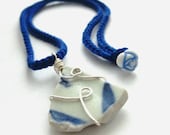
https://www.etsy.com/ie/listing/71814517/irish-jewelry-sea-glass-pendant-dark?ref=shop_home_active_2Irish Jewelry.  Blue Sea Glass Pendant.  Aqua Poolhttps://www.etsy.com/ie/listing/160803745/irish-sea-pottery-pendant-dazzling-blue?ref=shop_home_active_8


When it comes to wire wrapping sea glass and sea pottery I much prefer to let the shape, curves, dips and crests of the nugget dictate the way to go. I am often completely surprised by the end result so I find this method more fun.

This is where I drop the letter D. Back soon with the next in the series....
***   ***   ***